
Introduction
If you are looking for a simple way to publish articles online, build your digital presence, or share your expertise with a wider audience, creating an account on uploadarticle.com is the first step. Whether you are a blogger, business owner, freelancer, student, or digital marketer, having an account gives you access to features that make content publishing easier and more organized.
Many first-time users are unsure about the registration process, login options, or the information required to create an account. Fortunately, the entire process is straightforward and takes only a few minutes when you know the correct steps. This guide explains everything from signing up to logging in and managing your profile so that you can start publishing with confidence.
By following the instructions below, you’ll understand how to create an account, access your dashboard, and avoid common mistakes that new users often make.
Why Create an Account on UploadArticle.com?
Creating an account on uploadarticle.com offers several advantages for anyone interested in online publishing. Instead of simply browsing articles, registered users can access features designed to help writers manage their content more efficiently.
An account allows you to organize your submissions, update your profile, monitor your published work, and stay connected with the platform. If you’re building your personal brand or promoting a business, having an account also makes it easier to establish credibility through consistent publishing.
Whether your goal is to educate readers, improve online visibility, or share industry knowledge, registering is an important first step.
Understanding the UploadArticle.com Registration Process
The registration process is more than simply creating a username and password. When you sign up for uploadarticle.com, you are establishing the account that will eventually be associated with your published content, author information, and publishing activity. Taking a few minutes to provide accurate information at the beginning can save you from unnecessary problems later. For writers who plan to publish regularly, the account becomes a central part of their online publishing workflow rather than something they create once and forget about.
Before starting, it is useful to think about the type of presence you want to build. If you are publishing as an individual writer, your profile should clearly communicate your interests, expertise, or professional background. If you represent a business, the information you provide should be consistent with your broader brand identity. Keeping these details accurate helps create a more professional impression whenever someone discovers your profile or reads one of your articles.
The registration stage is also a good opportunity to choose a username carefully. A random combination of letters and numbers may be difficult for readers to remember, while a simple and recognizable username can make your profile easier to associate with your published work. If you intend to build a long-term presence, avoid selecting something that is tied to a temporary project or short-lived marketing campaign.
Your email address deserves equal attention. Use an address that you can access consistently because account-related communication may depend on it. If you lose access to the email connected to your account, recovering the publishing account could become more complicated. For professional use, a dedicated email address can also help separate publishing notifications from personal messages.
Once registration is complete, don’t rush straight into publishing. Spend a little time exploring the account interface and understanding where profile settings, submissions, and account management options are located. Becoming familiar with the dashboard early can make future publishing sessions faster and less frustrating.
A good registration process ultimately comes down to preparation and accuracy. Enter the correct information, use a secure password, verify your email if required, and review your account settings before submitting your first article. These small steps create a stronger foundation for everything you plan to do on the platform later.
Information You Need Before Registering
Before creating an account, it’s helpful to prepare a few basic details. Having everything ready will make the registration process quick and smooth.
Typically, you’ll need:
- A valid email address
- A unique username
- A secure password
- Basic profile information if requested
Choose an email address that you check regularly because important notifications, verification messages, and account updates may be sent there.
Step-by-Step Guide to Register on UploadArticle.com
Creating an account on uploadarticle.com is simple. Even if you’ve never signed up for a publishing platform before, you can complete the process within a few minutes.
Start by visiting the homepage and locating the registration or sign-up option. Clicking it will open the account creation form.
Enter your requested information carefully, making sure that all details are accurate. Double-check your email address because even a small typing mistake could prevent you from receiving important messages.
Next, create a strong password that combines uppercase letters, lowercase letters, numbers, and symbols. A secure password helps protect your account from unauthorized access.
Once you’ve completed the form, submit your information and wait for confirmation.
What Happens After You Create an UploadArticle.com Account?
After completing registration, the next stage is getting your account ready for actual publishing. New users often assume that registration is the entire process, but there are several useful things to check before submitting an article. Your first few minutes inside the account can help you understand how the platform is organized and prevent mistakes when you eventually upload content.
Start by reviewing your profile information. Make sure your display name, email address, and other visible details are correct. If the platform provides an author biography section, consider writing a short description that explains who you are and what subjects you write about. Keep it natural and informative rather than turning the bio into a collection of promotional claims.
Next, explore the areas related to article management. Look for options connected with creating, editing, saving, or reviewing submissions. The exact interface can change over time, so it is better to understand the labels and functions you actually see in your account rather than relying entirely on old screenshots or third-party instructions.
You should also look for any publishing guidelines available to contributors. These guidelines may explain acceptable topics, formatting requirements, link policies, image rules, or editorial expectations. Reading them before preparing your first submission can prevent avoidable delays. It is much easier to adjust an article before submitting it than to discover afterward that important parts do not meet the platform’s requirements.
Another useful step is preparing your content separately before placing it into an online editor. Keep a master copy of your article on your computer or cloud storage. That way, if a browser session expires or a submission form fails, you won’t lose your work. This simple habit is particularly important for long-form articles that took several hours to research and write.
Once your account is configured, you can approach your first submission with much more confidence. Rather than learning registration, profile management, formatting, and publishing simultaneously, you can handle each stage independently. That makes the entire experience easier for beginners and creates a repeatable workflow for future articles.
Verifying Your Email Address
After registering on uploadarticle.com, you may receive a verification email. This step confirms that the email address belongs to you and helps improve account security.
Open your inbox and look for the verification message. If it doesn’t appear immediately, check your spam or junk folder. Clicking the verification link usually activates your account within seconds.
Completing this step ensures that you can receive future notifications, password reset emails, and important platform updates without interruption.
How to Log In to Your Account
After registration is complete, logging in becomes a simple process.
Visit uploadarticle.com and select the login option. Enter the email address or username associated with your account, followed by your password.
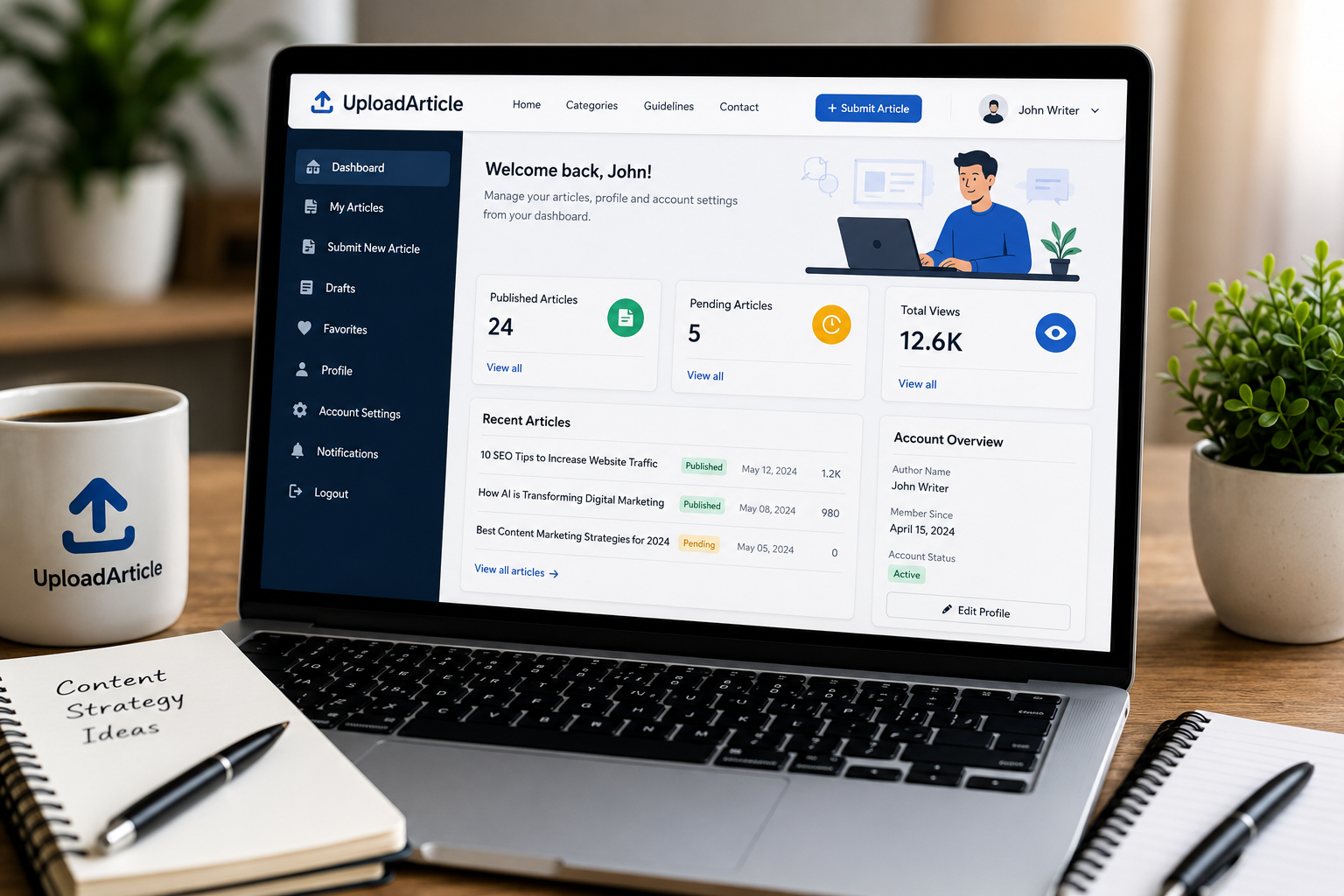
After submitting your credentials, you’ll be directed to your account dashboard, where you can manage articles, update profile information, and access available publishing features.
For convenience, some users choose to save their login information on personal devices. However, avoid doing this on shared or public computers to keep your account secure.
What to Do If You Forget Your Password
Forgetting a password happens to almost everyone, and recovering access is usually straightforward.
If you’re unable to log in to uploadarticle.com, click the “Forgot Password” option on the login page. Enter the email address linked to your account and follow the instructions sent to your inbox.
Create a new password that’s different from your previous one and easy for you to remember but difficult for others to guess.
Avoid using common words, birthdays, or simple number combinations that could weaken your account security.
Common Registration Mistakes to Avoid
Although creating an account is generally easy, a few common mistakes can delay the process.
One frequent issue is entering an incorrect email address. Even a single missing character can prevent verification emails from arriving.
Another mistake is choosing a weak password. Strong passwords significantly reduce the risk of unauthorized access.
Some users also forget to complete email verification, leaving their accounts partially activated. Taking a few extra moments to finish every registration step helps avoid future login problems.
Finally, always ensure you’re visiting the official uploadarticle.com website before entering your personal information. This helps protect your account and ensures you’re using the correct platform.
Benefits of Having a Complete Profile
Once you’ve successfully registered and logged in to uploadarticle.com, it’s a good idea to complete your profile. A well-maintained profile creates a more professional impression and can increase trust among readers.
Adding a profile photo, writing a short author bio, and including relevant information about your expertise makes your account more credible. Readers often appreciate knowing who is behind the content they are reading, especially when articles provide professional advice or educational information.
A complete profile also helps you build a recognizable online presence over time, particularly if you publish content regularly.
How to Prepare Your First Article for UploadArticle.com
Creating an account gives you access to the publishing environment, but the quality of your first article will determine the impression you make as a contributor. Before submitting anything, choose a subject that you understand well enough to explain clearly. A useful article should have a purpose, answer a question, solve a problem, or provide information that readers can actually use.
Start with a clear working title. The title should communicate the subject without making unrealistic promises. Once the title is established, organize the article into logical sections. Headings make longer content easier to scan and allow readers to find the information that matters most to them.
The introduction should quickly establish what the article will provide. Avoid spending several paragraphs discussing how you are going to discuss the topic. Instead, identify the reader’s problem or question and move naturally toward the solution. This approach makes the opening more engaging and reduces the chance that readers will leave before reaching the useful information.
Research is another important part of preparation. Even if you already know the subject, check important facts, statistics, dates, technical information, and claims before publication. Accuracy is especially important when writing about subjects such as health, finance, technology, law, or security. A confident writing style cannot compensate for incorrect information.
Pay attention to originality as well. Your article should be written in your own words and should offer a meaningful perspective rather than being a lightly modified version of another article. If you use information from external sources, understand how to reference it appropriately and avoid copying large portions of existing content.
Links should be added with a purpose. An internal link can direct readers to a related page on your own website, while an external link can provide supporting information from a reliable source. Don’t add links merely to increase the number of links in the article. A useful link should make the reader’s experience better.
Before submission, read the complete article from beginning to end. Look for repeated ideas, awkward transitions, spelling errors, broken links, and paragraphs that don’t contribute anything meaningful. A final editing pass can make a significant difference between content that looks rushed and content that appears professionally prepared.
Exploring Your Account Dashboard
After successfully logging in to uploadarticle.com, the dashboard becomes the central place for managing your activities. It is designed to help users access important features without unnecessary complexity.
From the dashboard, you can usually review your submitted articles, monitor publication status, update personal information, and manage your account settings. Taking a few minutes to explore each section will help you become familiar with the platform and make your publishing experience more efficient.
If you plan to contribute regularly, organizing your content through the dashboard can save time and make it easier to track your work.
Managing Published Articles and Submissions
Once you begin publishing, keeping track of your articles becomes increasingly important. A single submission is easy to remember, but managing several pieces of content across weeks or months can become difficult without an organized system. Your UploadArticle.com account can therefore become more useful when you treat it as a publishing workspace rather than simply a login page.
Keep a separate record of the articles you submit. Note the title, publication date, topic, destination URL, and any important links included in the article. This information can be useful later when you want to update your content strategy or understand which subjects you have already covered.
Review your published articles periodically when the platform allows it. Check whether the content still represents your current expertise and whether the links continue to work. Online information changes quickly, and an article that was accurate a year ago may contain outdated references today. Updating content where permitted can help maintain a more professional presence.
It is also useful to avoid publishing several nearly identical articles. Repeating the same topic with only minor wording changes can make your publishing activity look repetitive and provides little additional value to readers. Instead, develop different angles around a broader subject. For example, a technology writer might create separate articles explaining beginner concepts, practical applications, common mistakes, advanced strategies, and future developments.
Think about your content as a library. Every article should add something different to that library. Over time, a collection of genuinely useful pieces can communicate expertise much more effectively than a large collection of short articles written only to increase publishing volume.
If you use UploadArticle.com as part of a broader marketing strategy, keep your own website and other channels organized as well. Record which articles link to which pages and avoid creating unnecessary duplication. A simple spreadsheet can be enough to keep track of publication dates, topics, URLs, and promotional activities.
This type of organization becomes particularly valuable for businesses and professional writers. Instead of wondering what you have already published, you can see your content history at a glance and make informed decisions about what to write next. Good account management therefore supports not only convenience but also a more deliberate long-term publishing strategy.
Tips for Keeping Your Account Secure
Protecting your account should always be a priority. Although modern websites use security measures to protect user data, your own habits also play an important role.
When using uploadarticle.com, create a password that is unique and difficult to guess. Avoid reusing passwords from other websites, as doing so increases the risk if another account is compromised.
Enable additional security features if they are available, and never share your login credentials with anyone. If you access your account from a public computer, remember to log out before leaving the device.
Regularly updating your password is another simple habit that helps keep your account secure over the long term.
UploadArticle.com Account Security Best Practices
Account security should not be treated as something you worry about only after a problem occurs. A publishing account may contain your personal information, author profile, published work, and potentially access to other account-related features. Protecting that information begins with simple habits that reduce unnecessary risk.
The first rule is to use a unique password. If you use the same password across several websites and one of those services experiences a security incident, attackers may attempt to use the exposed credentials elsewhere. A password manager can make it easier to create and store strong passwords without requiring you to memorize every combination.
Be careful when logging in from unfamiliar devices. Public computers, shared workstations, and unsecured networks can create additional risks. If you must access your account from a device that isn’t yours, avoid saving your password and remember to log out completely when finished.
Phishing is another risk worth understanding. A message may appear to come from a familiar service and ask you to click a link or provide account information. Before entering your credentials, check the destination carefully and make sure you are accessing the legitimate website. Never provide your password in response to an unexpected email or message.
Keep your email account secure as well. Your publishing account may rely on your email address for password recovery and other important communication. If someone gains access to your email, they could potentially attempt to reset passwords for other services connected to it.
If additional security options are available, consider enabling them. Multi-factor authentication, where supported, adds another layer of protection because a password alone is not enough to access the account.
Finally, pay attention to unusual account activity. Unexpected password-reset messages, unfamiliar profile changes, or notifications about actions you didn’t perform may indicate a problem. If something seems suspicious, change your password and use the platform’s official support channels to investigate.
Security doesn’t need to be complicated. Strong credentials, careful login habits, secure email access, and awareness of suspicious messages can significantly improve the protection of your publishing account.
Managing Your Profile and Account Information
As your experience grows, you may want to update your personal information or improve your author profile. Fortunately, uploadarticle.com allows users to modify important account details whenever necessary.
You can update your display name, email address, password, profile picture, and biography to ensure your information stays current. Keeping your profile accurate helps readers recognize your work and builds greater trust in your published content.
A professional profile is especially valuable if you are using the platform to establish authority in your industry or promote your business.
Troubleshooting Common Login Problems
Occasionally, users may experience difficulty accessing their accounts. In most cases, these issues can be resolved quickly without technical assistance.
If you cannot log in to uploadarticle.com, first verify that your email address and password have been entered correctly. Check that Caps Lock is not enabled and ensure there are no accidental spaces before or after your login details.
If the problem continues, use the password recovery option and follow the instructions sent to your registered email address. Clearing your browser’s cache or trying another browser may also solve temporary login issues.
When none of these solutions work, contacting the platform’s support team is usually the best next step.
Best Practices for New Users
Creating an account is only the beginning. To get the most value from uploadarticle.com, focus on publishing original, informative, and well-structured content that genuinely helps readers.
Spend time understanding the platform’s publishing guidelines before submitting articles. Well-formatted content with clear headings, accurate information, and proper grammar generally provides a better reading experience.
Consistency also matters. Publishing useful articles on a regular basis helps build credibility and encourages readers to return for future content.
Remember that quality is always more valuable than quantity. A few well-researched articles often create a stronger impression than many low-quality submissions.
How to Build a Consistent Publishing Routine
One of the easiest ways to become more effective at online publishing is to create a routine instead of relying on inspiration. Waiting until you suddenly feel motivated to write can result in long gaps between articles. A simple schedule makes the process more predictable and helps you develop writing momentum over time.
Start by deciding how frequently you can realistically publish. There is no need to promise yourself that you will produce an article every day if your schedule does not support it. One carefully researched article each week or every few weeks can be more sustainable than producing a large amount of rushed content.
Create a list of potential topics in advance. Whenever you discover an interesting question, customer concern, industry development, or useful idea, add it to your topic list. When it is time to write, you won’t have to start from an empty page wondering what to cover.
Research and writing can also be separated into different stages. One day might be dedicated to collecting information and developing an outline, while another session focuses on drafting. Editing can happen afterward. Breaking the process into smaller tasks makes large articles feel less overwhelming.
Another useful practice is reviewing your previous work. Look at the topics you’ve covered and identify gaps. Perhaps you explained what a tool is but never wrote about how beginners can use it. Perhaps you covered the benefits of a service but didn’t explain its limitations. These gaps can become strong ideas for future articles.
Consistency also helps establish a recognizable writing identity. When readers repeatedly encounter useful information from the same contributor, they have more opportunities to become familiar with that writer’s perspective. Businesses can benefit from this in particular because consistent educational content can reinforce their expertise within a specific industry.
The goal is not to publish simply for the sake of publishing. A routine should make it easier to produce better content consistently. If a topic isn’t useful or you don’t have enough reliable information to support it, waiting until you can create something worthwhile is better than filling your publishing schedule with weak material.
Over time, a consistent process can turn content creation from an occasional task into a manageable system. Plan topics, research carefully, write with the reader in mind, edit thoroughly, and keep records of what you publish. That approach can make every future submission easier than the one before it.
Why an Organized Account Improves Your Publishing Experience
Maintaining an organized account allows you to work more efficiently over time. Regularly reviewing your submissions, updating your profile, and keeping your contact information current makes account management much easier.
Many successful writers develop a routine of checking notifications, monitoring published content, and refining their profiles as they gain more experience. By treating your uploadarticle.com account as part of your professional online presence, you can build greater credibility and improve your overall publishing experience.
Using UploadArticle.com as Part of a Broader Content Strategy
An UploadArticle.com account can be more useful when it is connected to a larger content strategy. Instead of treating every article as an isolated piece of writing, think about how each publication contributes to your overall online presence. This perspective can help you choose better topics, create stronger links, and maintain a consistent message across different channels.
For a business, the process might begin with the company’s own website. Important services, products, guides, and educational resources can form the foundation of the website’s content. External publishing platforms can then provide additional opportunities to discuss related subjects and introduce new audiences to the business.
For an individual writer, the strategy may look different. You might use published articles to demonstrate expertise in a particular niche, build a portfolio, and establish a recognizable professional identity. Over time, a focused collection of articles can show prospective clients that you understand not only how to write but also how to explain industry-specific subjects.
Social media can extend the life of published content as well. After an article goes live, you can share it through appropriate social channels where your target audience is active. Instead of simply posting the title and URL, consider extracting one useful insight, statistic, question, or short takeaway that encourages people to read the full article.
Email newsletters can provide another distribution channel. If you already have an audience that has chosen to receive updates, useful articles can become part of your regular communication. The important distinction is that the article should provide value rather than function purely as a sales message.
Content planning also helps prevent your strategy from becoming repetitive. Build groups of related subjects and cover them from different perspectives. A business operating in the software industry, for example, might publish beginner guides, comparison articles, troubleshooting resources, productivity tips, security advice, and explanations of emerging trends.
Measurement can help you refine the strategy. Depending on the information available to you, pay attention to which topics attract interest, generate engagement, or lead readers toward your other resources. Don’t judge every article by exactly the same standard. A brand-awareness article may serve a different purpose from a detailed educational guide.
The most effective approach is to view external publishing as one component of a larger ecosystem. Your website, external articles, social channels, email communications, and other marketing activities can support one another. When every piece has a clear purpose, publishing becomes less about producing volume and more about building a useful and recognizable online presence.
Frequently Asked Questions About UploadArticle.com Accounts
New users often have similar questions when they first create an account on an online publishing platform. Understanding the basics before getting started can make the registration and publishing process feel much easier. While specific features and requirements can change over time, the following points address some of the most common concerns users may have.
One common question is whether a newly created account can immediately publish content. This depends on the platform’s current registration and editorial procedures. Some publishing websites allow contributors to submit content after completing registration, while others may require additional verification or approval. Checking the current instructions inside your account is the safest way to understand what applies to your profile.
Another question involves changing account information. Users may want to update their email address, author name, profile photo, or biography after registration. If the relevant settings are available, keeping this information current is worthwhile because your profile contributes to the professional impression associated with your articles.
People also frequently wonder whether they should create a separate account for every type of content they publish. In most situations, maintaining a consistent author identity is more useful when your topics are related. If you write about several subjects that fit within one professional identity, organizing them under a single recognizable profile can make your publishing history easier to understand.
A further concern is what happens if an article needs to be corrected after publication. The answer depends on the platform’s editing and moderation options. If editing is available, review important articles periodically and correct outdated or inaccurate information when appropriate. If direct editing is not possible, you may need to contact the platform through its official support process.
Some users are also concerned about losing their content. Regardless of the platform, it is smart to keep a separate copy of every article you publish. Your master documents should be stored somewhere you control, preferably with a backup. This protects you against accidental deletion, technical problems, or changes to a third-party website.
Finally, remember that creating an account does not guarantee traffic, rankings, or business results. Those outcomes depend on many factors, including content quality, topic relevance, audience demand, competition, distribution, and the broader strategy surrounding your publishing activity.
The most useful way to approach an UploadArticle.com account is therefore as a publishing resource rather than a shortcut to instant success. Build a complete profile, publish genuinely useful content, maintain good security practices, keep copies of your work, and develop a consistent strategy. These habits create a much stronger foundation for long-term online publishing.
Conclusion
Creating an account on uploadarticle.com is a straightforward process that opens the door to sharing knowledge with a wider audience. From registration and email verification to logging in and managing your profile, every step is designed to help users begin publishing with confidence.
By following this guide, you can avoid common registration mistakes, keep your account secure, and make the most of the available features. Whether you’re a first-time writer, an experienced blogger, or a business looking to expand its online reach, understanding how uploadarticle.com works will help you navigate the platform more effectively.
With a properly configured account, you’ll be ready to publish valuable content, grow your online presence, and connect with readers around the world.
Frequently Asked Questions
Is creating an account on uploadarticle.com free?
In most cases, creating an account on uploadarticle.com is a simple process that begins by completing the registration form. Users should always review the platform’s current policies and requirements before signing up.
What should I do if I forget my password?
Use the password recovery option on the login page. A reset link is typically sent to your registered email address so you can create a new password.
Why am I not receiving the verification email?
Check your spam or junk folder first. If the email still hasn’t arrived, verify that you entered the correct email address during registration and request another verification message.
Can I change my profile information later?
Yes. Most publishing platforms allow users to update their personal information, profile picture, password, and biography through the account settings page.
How can I keep my account secure?
Use a strong, unique password, avoid sharing your login details, log out of public devices, and regularly review your account settings for better security.
