
Introduction
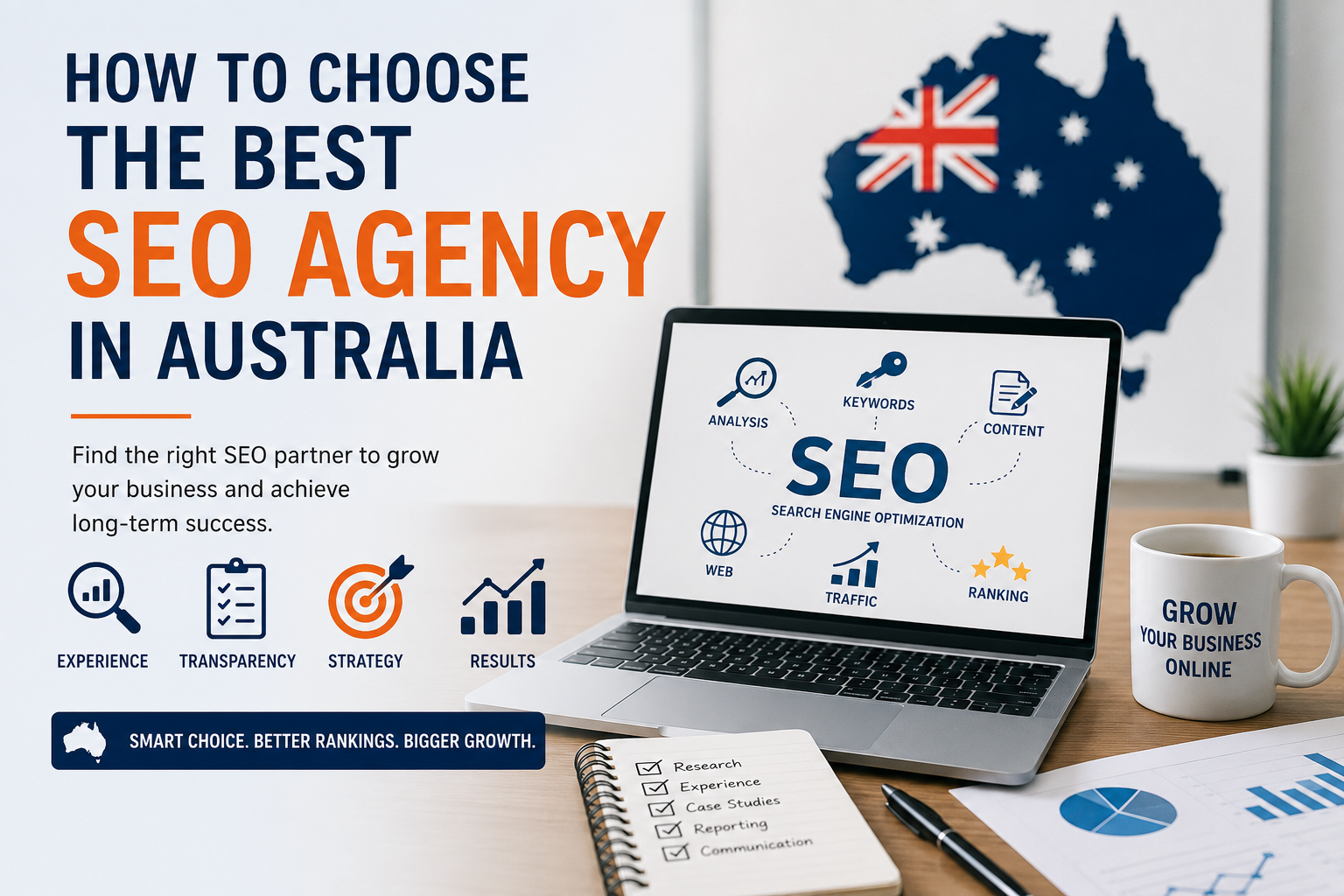
Building a successful online business is no longer just about having a professional-looking website. Every day, thousands of Australian businesses compete for attention on Google, making search engine optimization one of the most valuable long-term marketing investments. Whether you own a local café in Melbourne, an eCommerce store in Sydney, or a service-based company in Brisbane, appearing on the first page of search results can significantly influence your business growth.
With so many agencies promising quick rankings and guaranteed results, choosing the right SEO partner has become more challenging than ever. A professional agency should do more than improve keyword rankings. It should understand your business goals, analyze your competitors, create sustainable strategies, and help generate real business results rather than empty traffic numbers.
This guide from UploadArticle explains everything you should know before hiring an SEO agency in Australia. Instead of focusing on sales promises, we’ll explore the qualities that separate reliable SEO professionals from agencies that rely on outdated techniques or unrealistic claims. By the end of this guide, you’ll be able to make an informed decision that benefits your business for years to come.
Why Choosing the Right SEO Agency Matters UploadArticle
SEO is often misunderstood as a quick marketing tactic. In reality, it is an ongoing process that requires technical expertise, creative content development, market research, and continuous optimization. If you’re new to the concept, the Wikipedia guide on Search Engine Optimization provides a helpful overview of how SEO works and why it has become an essential part of digital marketing. Search engines like Google update their algorithms regularly, meaning strategies that worked a year ago may no longer deliver results today.
The right SEO agency doesn’t simply help your website rank higher. It helps your business attract visitors who are genuinely interested in your products or services. This targeted approach increases the likelihood of generating leads, sales, and loyal customers while improving your brand’s credibility online.
Many Australian businesses have experienced disappointing results because they selected agencies based solely on the lowest price or unrealistic guarantees. An experienced SEO company understands that every business is different. A local plumber requires a different strategy than a national eCommerce brand, while a legal firm needs a completely different content approach than an online clothing store.
Rather than applying one strategy to every client, experienced agencies create customized campaigns that align with specific business objectives. This personalized approach delivers stronger long-term performance and protects businesses from unnecessary risks.
Understanding Your Business Goals Before Hiring an SEO Agency
Before contacting any agency, it is essential to understand exactly what you want to achieve through SEO.
Some businesses want to generate more local enquiries, while others aim to increase online sales or establish themselves as industry authorities. Without clearly defined objectives, even the most experienced SEO professionals will struggle to measure success.
A reliable SEO agency begins every project by learning about your business instead of immediately discussing rankings. They ask about your target audience, competitors, products, services, existing marketing efforts, and long-term plans.
This discovery process allows them to recommend strategies that actually support business growth instead of chasing keywords that provide little commercial value.
For example, a dental clinic in Perth benefits more from ranking for location-specific searches than competing against nationwide informational keywords. Likewise, an online retailer may prioritize product-focused searches with buying intent rather than general informational traffic.
The best SEO campaigns are always built around business objectives rather than vanity metrics.
How a Professional SEO Audit Helps Australian Businesses
Before an SEO agency starts making major changes to a website, one of the most valuable steps is understanding what is already working and what is holding the business back. This is where an SEO audit becomes important. A professional audit examines different aspects of a website, including technical performance, content quality, keyword visibility, internal links, website structure, mobile usability, and potential opportunities that competitors may already be taking advantage of. Instead of making random changes, an agency can use the audit to create a strategy based on actual evidence.
For an Australian business, an audit should also consider the geographic market being targeted. A company serving customers in Sydney may have completely different competitors from one targeting Melbourne or Perth. Even businesses operating nationally can face different levels of competition depending on the products or services they offer. Understanding these differences allows an SEO professional to prioritize opportunities instead of spreading resources across hundreds of unrelated keywords.
A technical audit can reveal issues that ordinary website visitors may never notice. Broken links, slow-loading pages, incorrect redirects, duplicate pages, indexing problems, poor mobile usability, and confusing website architecture can all interfere with search visibility. Fixing these problems doesn’t necessarily produce an instant ranking jump, but it creates a stronger technical foundation for everything else the SEO campaign does.
Content auditing is equally important. An agency can identify pages that attract traffic but fail to generate enquiries, pages competing for the same keywords, outdated articles, thin service pages, and topics that the website hasn’t covered yet. This information can lead to a practical content roadmap rather than an endless cycle of publishing articles without a clear purpose.
A competitor audit adds another layer of insight. Instead of simply asking which keywords competitors rank for, professional SEO specialists can examine the quality and structure of their content, backlink profiles, service pages, local visibility, and overall user experience. The goal isn’t to copy competitors. It is to understand what customers are being offered and identify areas where your business can provide something better.
A good SEO audit should ultimately answer several important questions: Where are we now? What is preventing growth? What opportunities are available? Which improvements should happen first? When an agency can answer these questions clearly, the resulting SEO strategy becomes much more focused and easier to measure.
Experience and Industry Expertise Make a Significant Difference
Experience remains one of the strongest indicators of a trustworthy SEO agency.
Search engine optimization continues to evolve rapidly, requiring professionals to adapt to new ranking factors, artificial intelligence, user experience improvements, and content quality standards.
An experienced Australian SEO agency understands both international SEO practices and the unique characteristics of the Australian market. They know how Australians search online, which industries are highly competitive, and what type of content performs best for local audiences.
Instead of asking how many years an agency has existed, ask about the types of businesses they have helped. Agencies with diverse experience often adapt more quickly because they understand different industries, customer behaviors, and competitive landscapes.
Case studies also provide valuable insight into an agency’s capabilities. Rather than showcasing only rankings, trustworthy agencies demonstrate improvements in organic traffic, lead generation, conversions, and overall business performance.
These real-world examples provide stronger evidence than impressive marketing claims.
How to Evaluate an SEO Agency’s Case Studies
Case studies can be one of the most useful resources when comparing SEO agencies, but businesses should know what to look for. A case study filled with impressive screenshots and ranking graphs may look convincing at first glance, yet rankings alone don’t tell the complete story. The more useful question is whether the agency helped a real business achieve meaningful commercial results.
Look for case studies that explain the original challenge, the strategy implemented, the timeframe involved, and the results achieved. For example, an agency might explain that a local Australian service business struggled with low visibility in competitive suburbs, then describe how technical improvements, location-specific landing pages, Google Business Profile optimization, and relevant content were used to improve visibility. The strongest case studies connect these activities to measurable outcomes such as enquiries, bookings, sales, or qualified traffic.
Pay attention to the type of business featured as well. An agency that produced excellent results for a large eCommerce company may not automatically be the right choice for a small local business. Different websites have different technical requirements, customer journeys, budgets, and competitive environments. Relevant experience can therefore be more valuable than a long list of impressive but unrelated clients.
You should also ask whether the results were achieved organically or with additional marketing activities. SEO performance can sometimes be influenced by website redesigns, paid campaigns, public relations, brand campaigns, or seasonal demand. A transparent agency should be comfortable explaining the wider context rather than presenting every improvement as the result of one SEO tactic.
Another useful detail is sustainability. Did traffic increase for a few weeks and then disappear, or did the website continue performing after the campaign matured? Long-term growth is generally more meaningful than a temporary spike. A professional agency should be able to explain how it maintained and expanded results over time.
If an agency cannot provide detailed case studies because of client confidentiality, that does not automatically mean it is inexperienced. However, it should still be able to explain its methodology, anonymized results, or relevant examples. The objective is to gather enough evidence to determine whether the agency has the expertise and process required for your specific situation.
Ultimately, a good case study should help you understand how an agency thinks, not simply show you a number. Strategy, problem-solving, measurement, and consistency are the qualities that matter when evaluating a potential SEO partner.
Transparency Builds Long-Term Trust UploadArticle
One of the biggest differences between professional SEO agencies and unreliable providers is transparency.
SEO is not magic, nor is it an overnight process. Businesses deserve to understand what work is being completed, why specific strategies are recommended, and how progress will be measured.
Professional agencies communicate clearly from the beginning. They explain timelines honestly, discuss potential challenges, and provide realistic expectations based on competition and website condition.
Businesses should receive regular reports that explain website performance using understandable language instead of confusing technical jargon.
A transparent report might include improvements in organic traffic, keyword visibility, technical issues resolved, content published, backlinks earned, and future priorities.
This ongoing communication allows businesses to understand the value of their investment while maintaining confidence in the overall strategy.
When agencies avoid explaining their methods or refuse to share reports, it often indicates poor practices or lack of accountability.
A Strong SEO Strategy Goes Beyond Keywords UploadArticle
Many business owners still believe SEO is simply about inserting keywords throughout a webpage.
If you’re planning to publish content on UploadArticle, don’t miss our complete guide on UploadArticle.com Register, Login & Account Creation, which explains how to create an account, log in, and start publishing articles successfully.
Modern SEO has become much more sophisticated.
Google evaluates hundreds of ranking signals, including content quality, user experience, website performance, authority, trustworthiness, page speed, mobile usability, internal linking, structured data, and user engagement.
An experienced Australian SEO agency develops strategies that combine all of these elements into a complete digital marketing approach.
Content remains one of the most powerful ranking factors. However, successful content doesn’t exist solely to satisfy search engines.
It should answer real customer questions, solve genuine problems, and demonstrate expertise.
High-quality articles, informative service pages, buying guides, industry resources, and helpful FAQs all contribute to stronger visibility while improving user satisfaction.
Technical optimization is equally important.
Search engines must be able to crawl, understand, and index every important page efficiently. Slow loading times, broken links, duplicate content, poor website architecture, and mobile usability issues can reduce visibility regardless of content quality.
Professional SEO agencies identify these technical obstacles before they become long-term ranking problems.
Technical SEO, On-Page Optimization, and User Experience
A modern SEO campaign usually combines several disciplines rather than relying on one tactic. Technical SEO makes sure search engines can access and understand the website, while on-page optimization helps individual pages communicate their purpose clearly. User experience then determines whether visitors can actually find what they need once they arrive. When these areas work together, a website becomes stronger for both search engines and real customers.
Technical SEO begins with the foundation of the website. Search engines need to discover important pages, crawl them efficiently, and understand which versions should appear in search results. Issues such as incorrect canonical tags, broken redirects, blocked resources, duplicate URLs, or poor internal linking can create unnecessary confusion. A professional SEO agency identifies these issues and works with developers or website owners to resolve them.
On-page optimization focuses more directly on individual pages. This includes improving titles, headings, descriptions, content structure, image information, internal links, and topical relevance. However, good optimization does not mean stuffing a target keyword into every available space. Search engines have become much better at understanding topics, relationships, synonyms, and context.
User experience is where SEO and conversion optimization often overlap. Imagine a visitor searching for an emergency plumber in Brisbane. They click a result and arrive at a page that takes several seconds to load, contains confusing navigation, and makes the phone number difficult to find. Even if the page ranks well, it isn’t doing its job effectively. A better experience places the important information where users expect it and makes the next action obvious.
Mobile performance deserves particular attention because many users browse from smartphones. Text should be readable, buttons should be easy to tap, navigation should be simple, and important information should not be hidden behind unnecessary design elements. A professional agency should evaluate how the website performs across different devices rather than assuming desktop performance represents the entire audience.
Internal linking also deserves more attention than it often receives. Relevant internal links help users discover related information while giving search engines additional context about the relationship between pages. A well-structured website might connect a broad service page with detailed location pages, supporting guides, FAQs, and related resources.
The objective isn’t to optimize a website for search engines at the expense of people. The strongest SEO work does the opposite: it makes the website easier for search engines to understand because it is better organized and more useful for humans.
Content Quality Has Become More Important Than Ever
Artificial intelligence has changed the way content is produced, but Google’s priorities remain focused on usefulness, originality, and credibility.
Businesses should avoid agencies that publish large volumes of generic articles simply to increase page count.
Instead, quality content should demonstrate experience, answer user intent naturally, and provide information unavailable elsewhere.
Professional SEO writers research each topic carefully before creating comprehensive content that benefits readers while supporting business objectives.
This approach not only improves rankings but also builds trust with potential customers.
When visitors consistently find valuable information on your website, they are more likely to return, recommend your business, and eventually become paying customers.
For this reason, many successful Australian businesses now view content marketing as an investment rather than an expense.
Search Intent Should Guide Your Content Strategy
One of the most important concepts in modern SEO is search intent. A keyword tells you what someone typed into a search engine, but intent helps explain what that person actually wants. Two searches can contain similar words while representing completely different stages of the buying journey. Understanding this distinction allows Australian businesses to create pages that satisfy visitors instead of simply matching keywords.
Consider someone searching for “best running shoes Australia.” They may be researching different options and comparing features, prices, and brands. Someone searching for “buy running shoes Sydney” is likely much closer to making a purchase. Creating one generic page for both searches may not provide the best experience. A stronger strategy creates content appropriate to each stage.
Informational searches often require educational content. Guides, tutorials, definitions, comparison articles, and FAQs can answer questions for people who are still researching. Commercial investigation searches may benefit from comparison pages, product guides, case studies, or detailed service explanations. Transactional searches generally require highly relevant product or service pages that make it easy for visitors to take action.
Local intent adds another layer for Australian businesses. Someone searching for “SEO agency Brisbane” is communicating a geographic preference that should be reflected in the relevant page. Local service pages can explain the company’s expertise, service area, customer needs, and reasons to choose the business without creating dozens of nearly identical pages simply to target different suburbs.
A professional SEO agency should map keywords and topics to the appropriate pages rather than assigning dozens of keywords to one URL. This process helps prevent keyword cannibalization, where multiple pages compete for the same search intent. It also creates a clearer website structure in which each important page has a specific role.
Search intent should influence content length as well. Not every search requires a 3,000-word article. If someone wants a simple definition, forcing them to read thousands of words before finding the answer creates frustration. On the other hand, complex buying decisions may require detailed guides, comparisons, examples, and FAQs.
This is why experienced SEO professionals focus on usefulness rather than arbitrary word counts. The goal is to create the most appropriate resource for the searcher’s needs. When a page answers the right question clearly and completely, it has a much stronger chance of satisfying both users and search engines.
For Australian businesses, this approach can also improve conversions. Visitors who find exactly what they were looking for are more likely to trust the business, explore additional pages, request information, make a purchase, or contact the company.
Measuring Success Beyond Rankings UploadArticle
While keyword rankings remain important, they should never be the only measure of SEO success.
A website can rank first for dozens of keywords and still generate very little revenue if those keywords fail to attract qualified visitors.
The most successful SEO agencies focus on meaningful business metrics.
These include increases in qualified organic traffic, enquiry forms submitted, phone calls generated, product sales, appointment bookings, newsletter subscriptions, and customer acquisition costs.
This business-focused approach ensures SEO contributes directly to overall company growth rather than simply producing impressive-looking reports.
When an agency aligns SEO performance with measurable business outcomes, clients gain a much clearer understanding of their return on investment.
How SEO Reporting Should Work
Regular reporting is one of the easiest ways to determine whether an SEO partnership is actually delivering value. However, a useful report should do more than display a collection of graphs. It should explain what happened, why it happened, what work was completed, and what the agency plans to do next.
A strong monthly SEO report typically begins with a summary of important developments. This might include organic traffic changes, keyword visibility, leads, conversions, technical improvements, newly published content, or authority-building activities. The report should make these numbers understandable to someone who isn’t an SEO specialist.
Traffic needs context. An increase in visitors can sound impressive, but it doesn’t necessarily mean business performance improved. For example, traffic could rise because a website started ranking for a large number of low-intent informational searches. Meanwhile, valuable commercial pages might remain unchanged. A professional agency therefore looks beyond total traffic and examines whether the right people are arriving.
Conversions provide another important layer. Depending on the business model, a conversion might mean a phone call, contact form, online purchase, booking, quote request, or another meaningful action. Tracking these events allows the agency and business owner to understand whether SEO is contributing to revenue rather than simply generating visits.
Reports should also identify completed work. If the agency conducted a technical audit, optimized important pages, created new content, improved internal linking, or earned relevant mentions, the client should understand what was done and why. This transparency creates accountability and makes it easier to evaluate progress over time.
A good report also acknowledges problems. SEO doesn’t always move in a straight upward line. Rankings can fluctuate, competitors can become more aggressive, seasonal demand can change, and search engine updates can affect visibility. Hiding negative developments doesn’t help anyone. A trustworthy agency explains what changed and what actions should be taken.
The best reports finish with priorities for the next period. Instead of simply saying “continue SEO,” the agency should explain which opportunities deserve attention and why. This turns reporting into a strategic conversation rather than a monthly administrative task.
Businesses should also feel comfortable asking questions about reports. If a metric isn’t clear, ask for an explanation. If a result looks unusual, discuss it. A good SEO relationship should make the business owner feel more informed over time, not more dependent on unexplained technical language.
Pricing Should Never Be the Only Deciding Factor UploadArticle
One of the biggest mistakes businesses make when choosing an SEO agency is focusing only on price. While staying within budget is important, selecting the cheapest provider often leads to disappointing results. Effective SEO requires skilled professionals, detailed research, quality content, technical expertise, and consistent monitoring. These services take time and experience, which is why reputable agencies rarely compete on price alone.
Australian SEO agencies usually offer different pricing models depending on the size of the project. Some work on monthly retainers, while others provide custom packages tailored to business goals. Instead of comparing agencies by cost alone, compare the value they offer. Ask what services are included, how often reports will be provided, whether technical SEO is covered, and how content creation is handled.
A trustworthy agency will clearly explain where your investment goes and how each activity contributes to long-term growth. They will never promise instant rankings simply because you are paying more.
Understanding Different SEO Pricing Models in Australia
SEO pricing can be confusing because agencies structure their services in different ways. Some charge a monthly retainer, some offer fixed-price projects, and others create customized packages based on business requirements. Understanding these models can make it easier to compare proposals without automatically choosing the cheapest option.
A monthly retainer is common for ongoing SEO campaigns. The business pays a recurring amount in exchange for a defined range of services, which may include technical optimization, content development, reporting, keyword research, local SEO, and authority-building activities. This model works well when SEO is treated as a continuous growth strategy.
Project-based SEO can be appropriate when a business has a specific need. For example, a company might hire an agency for a technical audit, website migration, SEO strategy, or content audit. Once the project is complete, the business can decide whether additional ongoing support is required.
Some agencies use tiered packages. A basic package may focus on a smaller website and limited geographic targeting, while a larger package may include extensive content production, technical work, competitor analysis, and national campaigns. Comparing these packages requires more than looking at the monthly price because the amount of work and level of competition can vary significantly.
Businesses should ask for a clear breakdown of deliverables. How many pages will be optimized? How much content will be created? Is technical development included? Who writes the content? How are backlinks obtained? How often will meetings happen? What reporting is provided? These questions help reveal whether two apparently similar packages actually provide very different levels of service.
Be cautious when an agency sells SEO primarily through extremely large quantities. Hundreds of low-quality articles or thousands of questionable backlinks may sound impressive, but volume alone doesn’t create sustainable search visibility. Quality, relevance, expertise, and strategic alignment matter far more.
There is also a difference between cost and value. An expensive campaign isn’t automatically effective, just as a low-cost campaign isn’t automatically poor. The real question is whether the agency’s expertise, processes, deliverables, and expected outcomes justify the investment.
Australian businesses should therefore compare proposals based on strategy and expected business impact. A slightly higher investment in a capable agency may produce considerably better results than a cheap campaign that requires constant correction later. The goal should be to find a sustainable partnership rather than simply minimizing the monthly invoice.
Questions You Should Ask Before Hiring an SEO Agency
Before signing any agreement, spend time asking meaningful questions. A reliable agency welcomes these conversations because they understand that SEO is built on trust and long-term collaboration.
Ask how they research keywords, what tools they use, how they measure success, and how often they communicate with clients. It is also worth asking how they stay updated with Google’s algorithm changes and whether they have experience working with businesses similar to yours.
Another important question involves link building. Ethical agencies build high-quality backlinks naturally through valuable content and genuine outreach. If an agency talks about purchasing thousands of backlinks or guaranteeing hundreds of links within days, it should raise concerns.
You should also understand who will be managing your campaign. Some companies outsource most of their SEO work, while others have experienced in-house specialists. Knowing who is responsible for your project makes communication much easier throughout the partnership.
Red Flags That Should Not Be Ignored UploadArticle
Not every SEO agency follows best practices. Some rely on outdated methods that may deliver short-term improvements but eventually harm a website’s reputation.
One of the biggest warning signs is any agency that guarantees the number one position on Google. Search rankings depend on countless factors, many of which are controlled by Google itself. No agency can honestly promise first-page rankings for every keyword.
Another red flag is a lack of transparency. If an agency refuses to explain its strategy, avoids sharing reports, or becomes defensive when asked simple questions, it may not be operating professionally.
Businesses should also be cautious of extremely low pricing. Quality SEO involves technical audits, competitor research, professional writing, website optimization, and continuous monitoring. These services require experienced specialists and cannot realistically be delivered for unrealistically low monthly fees.
Finally, avoid agencies that focus only on rankings while ignoring business performance. Higher rankings are valuable only when they generate qualified visitors who become customers.
Why Local Knowledge Matters in Australia
Australia has a unique digital market with businesses competing across both local and national search results. Customer behavior in Sydney may differ significantly from users in Adelaide, Brisbane, Perth, or regional areas.
An agency familiar with the Australian market understands local search intent, regional competition, and industry-specific opportunities. They know how to optimize Google Business Profiles, improve local citations, and create content that resonates with Australian audiences.
Local expertise also helps businesses target nearby customers more effectively. Whether someone searches for a plumber, dentist, lawyer, or restaurant, local SEO often determines which businesses appear first in Google’s search results.
Working with professionals who understand these regional differences can provide a meaningful competitive advantage.
Local SEO Strategies for Australian Businesses
For businesses that depend on customers in specific locations, local SEO can be one of the most valuable components of a digital strategy. A customer searching for a service near them is often demonstrating strong commercial intent. If your business isn’t visible when that search happens, competitors have an opportunity to capture the customer instead.
Google Business Profile optimization is an important part of local visibility. Businesses should make sure their information is accurate, categories are appropriate, contact details are consistent, and the profile reflects the services actually offered. Photos, updates, customer reviews, and other relevant information can also contribute to a stronger local presence.
Reviews deserve special attention. Genuine customer reviews can influence how potential customers perceive a business before they visit its website. A professional SEO agency can help establish ethical processes for requesting reviews, but businesses should never rely on fake reviews or misleading practices. Authentic feedback is more valuable because it reflects real customer experiences.
Local landing pages can also support geographic targeting. A business serving multiple Australian cities or regions may need pages that explain the services available in each location. However, simply replacing the city name on an identical template is not enough. Useful local pages should contain genuinely relevant information about the area, customer needs, service availability, and reasons the business operates there.
Local citations and consistent business information can help reinforce location signals. Phone numbers, addresses, business names, and other details should be accurate wherever the business is represented online. Inconsistent information can create confusion for customers and search engines alike.
Australian businesses should also consider regional language and customer behavior. Search habits aren’t identical across every location, and competition can vary dramatically. A campaign targeting central Sydney may require a very different approach from one targeting a regional town.
For service-area businesses, local SEO can be particularly powerful. Plumbers, electricians, cleaners, legal professionals, healthcare providers, tradespeople, and other local services often depend on customers finding them when a need arises. Strong local visibility can put these businesses in front of people at precisely the moment they are searching for help.
The most effective local SEO strategy combines accurate business information, relevant website content, strong customer experiences, genuine reviews, and a consistent online presence. It isn’t simply about adding a city name to a page. It is about demonstrating to both customers and search engines that your business is genuinely relevant to the location and services being searched.
Why Long-Term SEO Always Outperforms Shortcuts
Many businesses expect SEO to produce immediate results. While small improvements may appear within a few months, sustainable growth takes patience and consistency.
Search engines reward websites that continuously provide valuable information, maintain technical quality, and earn genuine authority over time. Agencies that focus on shortcuts often rely on manipulative tactics that eventually lead to ranking losses or even Google penalties.
Successful SEO is built gradually through quality content, technical improvements, user experience enhancements, and ethical link building. Every improvement strengthens the website’s overall authority and creates a stronger foundation for future growth.
Businesses that understand this long-term approach are usually the ones that achieve lasting success.
Preparing Your SEO Strategy for the Future
The search landscape is changing quickly, and Australian businesses need SEO strategies that can adapt rather than depend on one temporary ranking tactic. Search engines increasingly focus on understanding the meaning behind searches, evaluating content quality, and delivering useful experiences across different devices and search formats. This means businesses should build strong digital foundations instead of chasing every new trend.
Artificial intelligence is one of the biggest changes affecting online search and content creation. AI can help businesses research topics, analyze information, generate ideas, and improve productivity, but simply producing large quantities of automated content is not a sustainable strategy. Human expertise, original insight, accurate information, and genuine usefulness remain important differentiators.
A future-ready SEO strategy should therefore focus on demonstrating expertise. Businesses should create content based on real customer questions, professional experience, original research, useful examples, and trustworthy information. Instead of asking, “How many articles can we publish this month?” a better question is, “What valuable information can we provide that our customers cannot easily find elsewhere?”
First-party knowledge can become particularly powerful here. A business has access to information that generic content creators don’t. Customer questions, support conversations, product knowledge, project experience, industry observations, and internal expertise can all become valuable content sources. Turning this real-world knowledge into useful resources can make a website more distinctive.
Brand visibility also matters. SEO should not exist completely separately from other marketing activities. Public relations, social media, email marketing, partnerships, community involvement, and content distribution can all contribute to broader online recognition. A recognizable brand may receive more direct searches, mentions, links, and engagement over time.
Businesses should also prepare for users consuming information through different search experiences. People may interact with traditional search results, maps, videos, shopping results, featured information, and AI-powered search experiences. A diversified content strategy can help businesses remain discoverable as user behavior evolves.
The most important principle is adaptability. No SEO agency can predict every future algorithm change, but an experienced agency can build a strategy that doesn’t depend on manipulating one ranking factor. Technical quality, useful content, strong user experience, genuine authority, and clear business positioning are durable foundations.
For Australian businesses, the future of SEO should therefore be approached as a long-term investment in digital visibility and customer trust. Agencies that understand this broader perspective are better positioned to help businesses navigate changes without constantly rebuilding their strategy from scratch.
Why UploadArticle Recommends Careful Research Before Hiring
At UploadArticle, we believe businesses should never rush into choosing an SEO agency. The right partnership can become one of the most valuable investments a company makes, while the wrong decision can waste both time and marketing budget. Businesses can also explore insights from experienced UploadArticle.com authors, where industry contributors regularly share practical SEO tips, digital marketing strategies, and content designed to help readers make informed decisions.
Researching multiple agencies, reading client testimonials, reviewing case studies, and asking detailed questions helps businesses identify professionals who genuinely understand search engine optimization.
A reputable agency focuses on transparency, ethical SEO practices, measurable business outcomes, and long-term success instead of making unrealistic promises.
As search engines continue evolving with artificial intelligence and improved user experience signals, businesses need partners who are committed to continuous learning and adaptation.
Final Thoughts UploadArticle
Choosing the best SEO agency in Australia is about much more than comparing prices or selecting the company with the biggest marketing claims. The right agency becomes a long-term growth partner that understands your business, develops customized strategies, and continuously improves your online visibility.
Instead of chasing quick wins, focus on agencies that prioritize transparency, quality content, technical excellence, and measurable business results. A professional SEO strategy takes time, but the long-term rewards include stronger brand authority, higher-quality traffic, increased customer trust, and sustainable business growth.
Whether you operate a small local business or a growing national company, investing in the right SEO partner can create opportunities that continue delivering value for years to come. With careful research and realistic expectations, Australian businesses can confidently choose an agency that supports their digital success.
Frequently Asked Questions
What does an SEO agency in Australia do?
An SEO agency helps businesses improve their visibility on search engines by optimizing website content, fixing technical issues, conducting keyword research, building authority through backlinks, and creating long-term strategies that increase organic traffic.
How long does SEO take to show results?
Most businesses begin seeing noticeable improvements within three to six months, although highly competitive industries may require additional time. SEO is an ongoing process rather than a one-time project.
Is hiring an SEO agency worth it?
Yes. A professional SEO agency can help attract qualified visitors, improve search rankings, increase leads, and generate sustainable growth that continues long after paid advertising campaigns end.
Can an SEO agency guarantee first-page rankings?
No. Ethical SEO agencies never guarantee first-page rankings because Google’s algorithms constantly change and rankings depend on many competitive factors outside any agency’s control.
What should I look for before hiring an SEO agency?
Look for industry experience, transparent reporting, ethical SEO practices, strong client testimonials, realistic expectations, and a customized strategy that matches your business goals.
How much does SEO cost in Australia?
SEO pricing varies depending on competition, business size, and campaign scope. Rather than choosing the cheapest option, businesses should focus on the value and expertise an agency provides.
Why is local SEO important for Australian businesses?
Local SEO helps businesses appear in location-based searches and Google Maps, making it easier for nearby customers to discover products and services when they are ready to buy.
Why does UploadArticle recommend researching SEO agencies carefully?
UploadArticle encourages businesses to compare agencies, review case studies, and ask detailed questions before making a decision. Careful research reduces the risk of choosing inexperienced providers and helps businesses find an agency capable of delivering sustainable long-term results.
